Schedule
HostsWays to Give
HomePlaylistSchedule
HostsEventsOn DemandOur StoryOur TeamWays to Give Become a Sponsor
How to ListenVisit Help CenterContact Us

Find Us on Social Media:

Logo image

Find Us on Social Media:

Download Our Mobile App:

google play icon

About

HomePlaylistSchedule
HostsOn DemandOur StoryOur Team

Community

EventsWays to Give Become a SponsorPressDiversity StatementCareersAnnual EEO ReportDigital Accessibility

Help

Visit Help CenterContact UsHow to Listen

©2026 Classical California

Sweepstakes RulesFCC ComplianceLocal Public FilesCPB ComplianceAnnual EEO ReportPrivacy PolicyCode of Integrity

articles / Chapman Challenge

How Do You Tune a Pipe Organ and How Often Do They Need Tuning?

Chapman ChallengePop CultureOrgan


KDFC’s Alan Chapman has a lot to say about music, but can he say it in 60 seconds? That’s the Chapman Challenge. We ask a question and Alan has a minute to answer it.

Today’s question is from Bob Marcotte who wants to know “How do you tune a pipe organ and how often do they need tuning?”

Hit play below to listen to this week’s Chapman Challenge.
 

How Do You Tune a Pipe Organ and How Often Do They Need Tuning?
00:00


Well, I figure the answer should be accompanied by some organ music, so let’s go with some Handel.

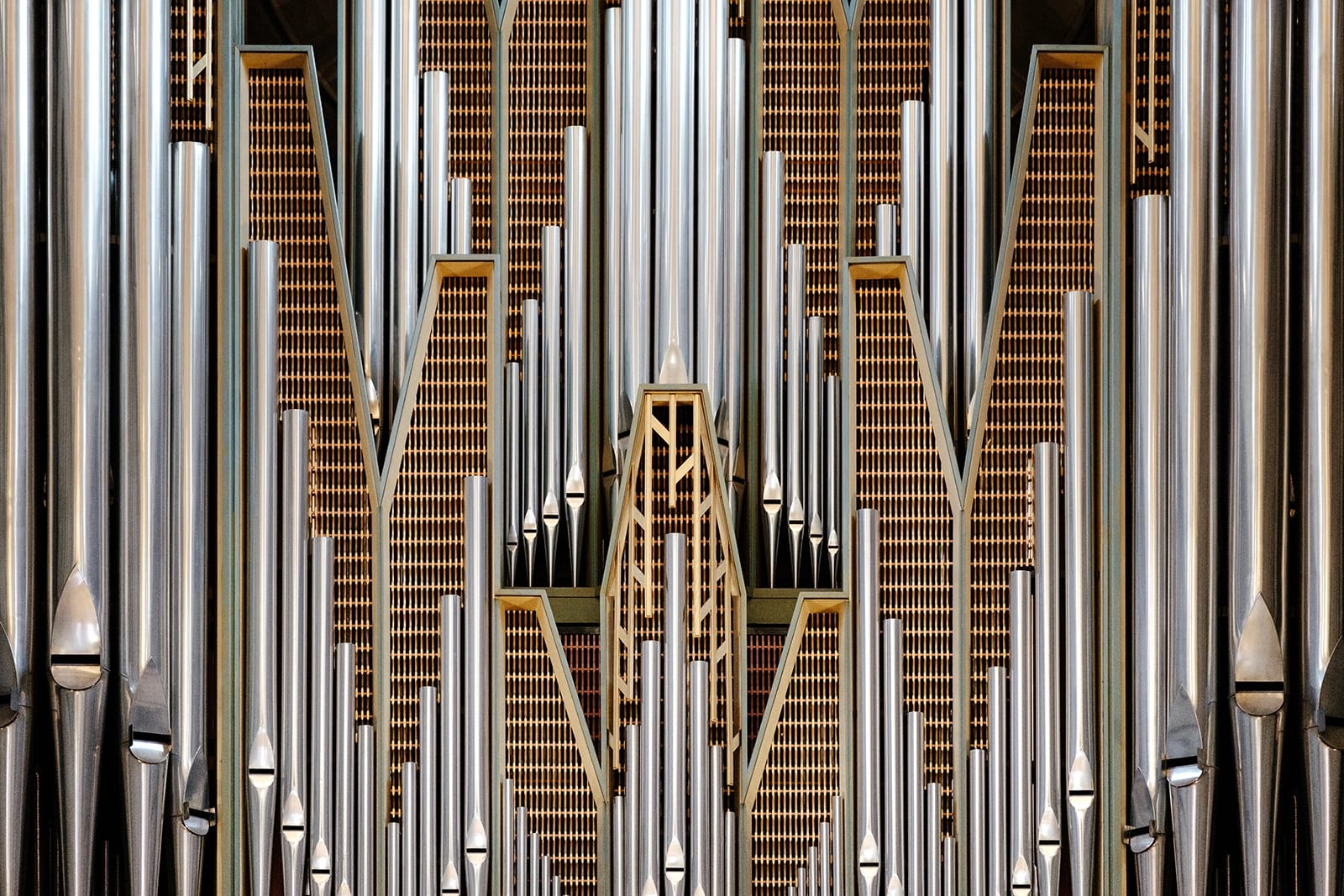
Organ technicians will tell you that a pipe organ is a delicate musical instrument. Some are more temperamental than others, but all of them need regular care and service. And the most common maintenance is tuning. Pipe organ tuning is affected by temperature changes, so you might expect to tune an organ when seasons change, when the heat is turned on in the winter and when the air conditioning is turned on in the summer.

Since the pitch of each note depends on the length of the pipe, tuning means making changes in the lengths of the pipes. One method involves tapping up or down on the metal collar at the top of a pipe to raise or lower the pitch. One technician works inside the organ while another sits at the keyboard.

And it can take a while. There’s a set of pipes for each different sound. For example, the organ at Walt Disney Concert Hall has 6,134 pipes. The initial tuning of that organ took a year.

Chapman ChallengePop CultureOrgan
Written by:
Alan Chapman
Alan Chapman
Published on 01.14.2020
Loading...

MORE LIKE THIS

How Do You Loan a Stradivarius?

How Do You Loan a Stradivarius?

Explore how rare Stradivarius violins, often owned by foundations or wealthy individuals, are loaned to musicians through intermediaries like the Stradivari Society of Chicago.

03/03/2020
What is the Most Common Key for a Symphony and Why?

What is the Most Common Key for a Symphony and Why?

In this Chapman Challenge, Alan explains why D major is the most common key for a symphony, highlighting its popularity among 18th-century composers like Haydn and Mozart.

03/01/2020
The Difference Between a Viola and a Viola Da Gamba

The Difference Between a Viola and a Viola Da Gamba

In this Chapman Challenge, Alan explains the differences between a viola and a viola da gamba, highlighting their physical characteristics, how they're played, and their historical context.

01/24/2020
What Happens When a Violinist Breaks a String?

What Happens When a Violinist Breaks a String?

Explore the Chapman Challenge where Alan discusses what happens when a violinist breaks a string during a performance, citing examples from renowned musicians.

11/12/2019
What’s the Relationship Among the Movements in a Symphony?

What’s the Relationship Among the Movements in a Symphony?

In this Chapman Challenge, Alan discusses the harmonic and melodic relationships among the movements of a symphony, using Beethoven's Fifth Symphony as an example.

04/01/2019
Chapman Challenge: What Is a Chaconne?

Chapman Challenge: What Is a Chaconne?

In this Chapman Challenge, Alan Chapman explains the chaconne, a Baroque musical form built on a repeated series of chords, using Henry Purcell's work as an example.

04/01/2019