articles / Hosts
Marin Alsop’s Purple Baton: Empowering the Leaders of Tomorrow
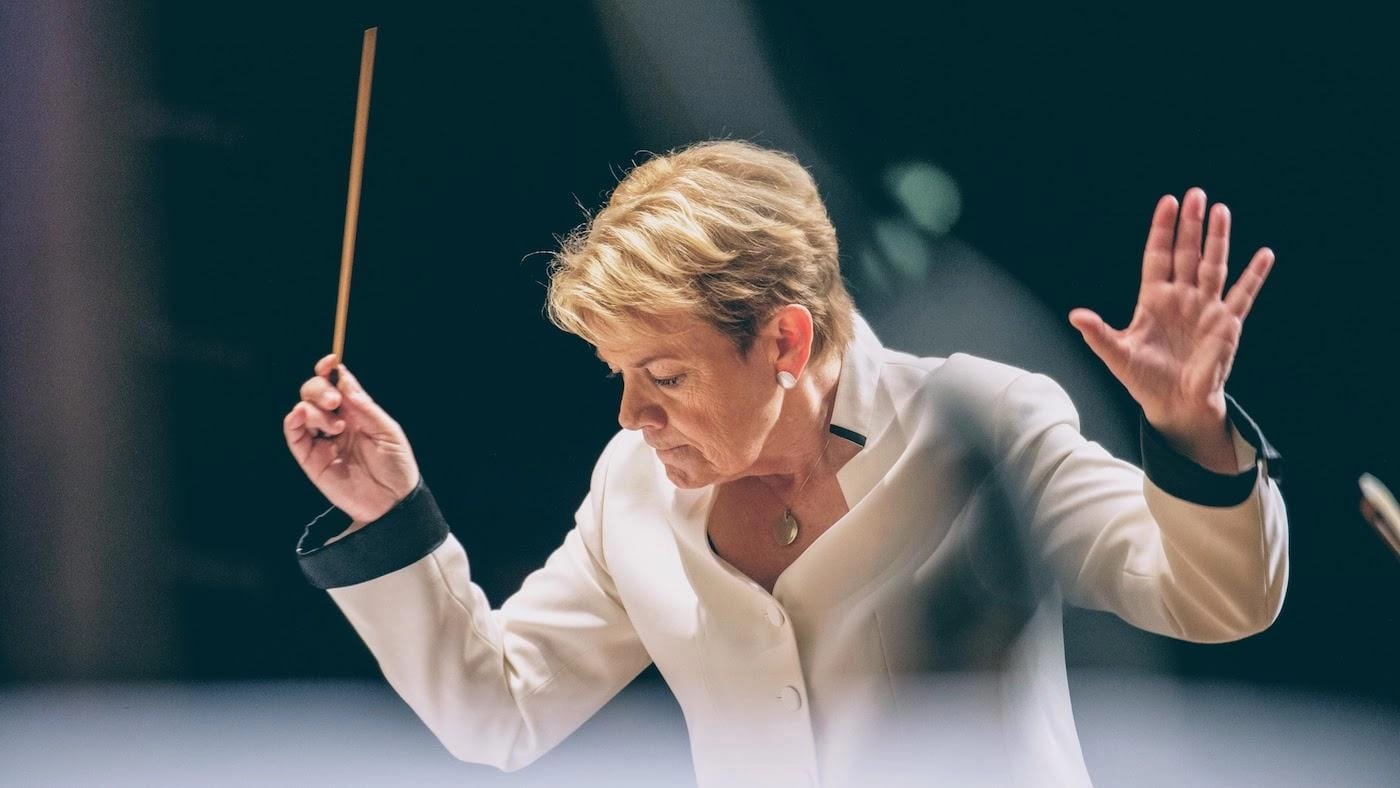
In the world of classical music, no celebration of Women’s History Month would be complete without recognizing Marin Alsop. One of the foremost conductors of our time, she is the first woman to serve as the head of major orchestras in the United States, South America, Austria, and Great Britain. Called a “conductor with a vision” by the New York Times, she is internationally recognized for her innovative approach to programming and community engagement, her deep commitment to education, and her presence as a global ambassador for music.
Throughout her career, Alsop has kept an eye on the future, devoting herself to work that ensures a smoother path for the next generation of female conductors. In 2002, she co-founded the Taki Concordia (now the Taki Alsop) Conducting Fellowship,which provides intensive coaching, mentorship and financial support to women conductors as they progress in their careers. Today, all 42 award fellowship winners hold Music Director or chief conductor positions of orchestras around the world and are working to ensure a more equitable future for classical music through their artistry and advocacy.
This month, for the second year in a row, Alsop is celebrating Women’s History Month by leading major conductors and classical music institutions in the #PurpleBaton global movement, advocating for greater representation of women music directors and conductors in classical music.
I caught up with her for this conversation about the presence of women on the podium and in leadership roles throughout the music world - change that is a long time coming.
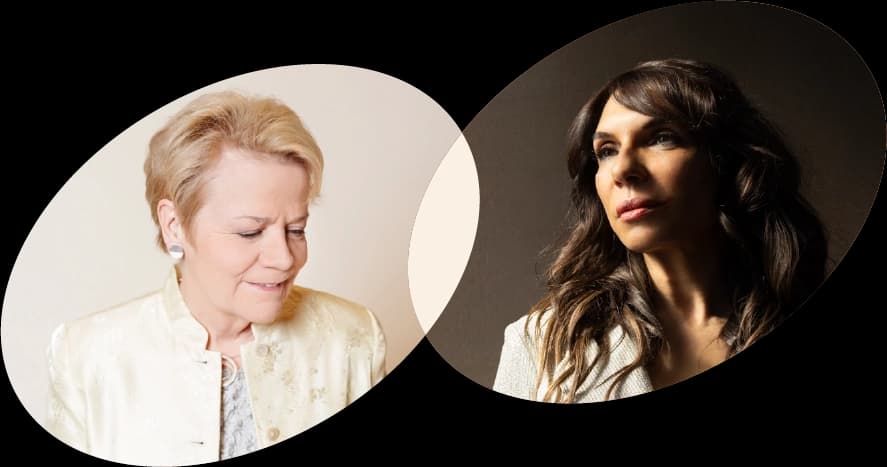
Lara and Marin's Interview Transcript:
Lara Downes (LD): In the world of classical music, we often focus on the trailblazing, groundbreaking women of the past: Clara Schumann, Amy Beach, Florence Price, Marian Anderson… But I want to celebrate you as a trailblazer and groundbreaker of the present and the future. Your global social media campaign Purple Baton (purple being an official color of Women's History Month) is challenging the status quo by highlighting the need to support female conductors. Would you tell me a bit about the inspiration and the vision for that initiative?
Marin Alsop (MA): The idea is really to try to try to draw some attention in a fun way to the fact that women are definitely underrepresented in the conducting field. We thought this would be a fun way to get everybody on board. And really, it's such a good visual because seeing women on the podium is not just about conducting. It's also about leadership. And we need to support women in leadership roles across the board, I think.
LD: Right - for change to be effective, it happens on the podium, but it also has to happen in board rooms and administrative offices. You've been facilitating this change for a long time, and I see how steady and mindful that work has been. How do you look at the equation of all the changes that need to happen in order to build a different future?
MA: You know, I think the good news is that we've passed the tipping point of going backward, although of course we see in society that that the pendulum swings one way and then dramatically the other. The success has been hard won. It's not like everyone just opened the door! You know, these, there have been talented women out there for decades, if not centuries. And it was a choice not to open the doors to them. But I'm just grateful that we're at a point where there are enough women, enough super talented women, that I don't think those doors can be fully closed again. I think it’s a really critical moment now for us to lock arms and move forward united as women to say that we, and all of our daughters, deserve the same opportunities as our male colleagues.
You know, the challenge with conducting is that it's not like playing the piano or the violin, where you can practice at home all day long. I mean, you could practice conducting, but if you don't have an orchestra as your instrument, it's all imaginary. You need an orchestra to experiment on, to learn how to make mistakes, learn what works, learn what doesn't work for your body, for your communication. I mean, it's a complex art form.
And women need to have more opportunities. I would say that opportunities are much better now. But they're still, I think, fractional compared to our male colleagues. And young men also seem to be given more chances, and they're given a pass. You know: “ Oh, yeah, well, that didn't go well for him, but let’s see how he does next time.” You know, they're given the chance to grow. But with a young woman on the podium, you hear “Well, I told you that a woman can’t do that.” instead of saying “Yeah, I see she needs to learn or work on this or stuff.” So the reason I started the fellowship was to create more opportunities, more safe opportunities, so it wasn't always a make-or-break situation. You know, there are now over 60 women who have come through the Taki-Alsop fellowships, and that means that they have each other to lean on as a community. They can talk about anything from interpersonal challenges that we have to deal with on the podium, to musical issues like tempi or interpretation, to questions of career and family - there are so many issues that are very specific to being a woman conductor. And they all tell me that before this fellowship experience, they felt completely alone.
LD: Yes! Having a community, I feel that as a soloist too. I mean, the whole field is still quite male. You know, I've worked with several women conductors who've come through your fellowship - Mei-Ann Chen, Rei Hotoda, Valentina Peleggi… And when I walk onto the stage for the first rehearsal with an orchestra and there's a woman on the podium, it really does feel like a different energy.
MA: It really is a different experience, isn't it? And you know, I'm also very inspired by women in the audience who come up to me afterwards and say “You know, I love classical music; I go to lots of concerts. But seeing a woman on the podium was a different experience for me, and I felt empowered by it. And so I think that that's the great gift, that we can create a community. And for young women coming up, I hope they see and are inspired by the fact that there are these women standing up for them. And, you know, it has to be visible, and we have to show it. I think the purple baton is a symbol, of course. The baton is a symbol in many ways. It's a symbol of leadership.It's a symbol of discipline. It's a symbol of commencement, gathering, unity…
LD: I have all of those things very much on my mind right now - leadership and change and equality - because I'm working on a big project called Declaration that’s celebrating American music as we mark the nation’s 250th anniversary, contemplating the possibilities of the next chapter in our history. And I would love to ask you, what is your hope for the next 250 years in this country, and specifically in the Symphony Hall?
MA: It's a complicated question, of course, but I hope that we can get back to a moment where we led with compassion. I think the great thing about music is that it's nonpartisan. And it can unify in a way that language can't. And I hope that incredible gift is valued in the future moving forward.
Marin Alsop and the Taki Alsop Conducting Fellowship invite you to join the #PurpleBaton campaign in honor of National Women’s History Month and International Women’s Day. Today, only 10 percent of the world’s music directors are women or non-male identifying. #PurpleBaton will inspire orchestras and classical music organizations to bring more women onto the podium.
Anyone interested in supporting the campaign may order their own purple baton for $15 on batonz.com/purplebaton, and is encouraged to use the hashtag #PurpleBaton on social media.
More information at https://www.marinalsop.com/projects/purplebaton/