Schedule
HostsWays to Give
HomePlaylistSchedule
HostsEventsOn DemandOur StoryOur TeamWays to Give Become a Sponsor
How to ListenVisit Help CenterContact Us

Find Us on Social Media:

Logo image

Find Us on Social Media:

Download Our Mobile App:

google play icon

About

HomePlaylistSchedule
HostsOn DemandOur StoryOur Team

Community

EventsWays to Give Become a SponsorPressDiversity StatementCareersAnnual EEO ReportDigital Accessibility

Help

Visit Help CenterContact UsHow to Listen

©2025 Classical California

Sweepstakes RulesFCC ComplianceLocal Public FilesCPB ComplianceAnnual EEO ReportPrivacy PolicyCode of Integrity

articles / Pop Culture

A Concerto with the Beethoven Stamp

Pop CultureThe State of the Arts

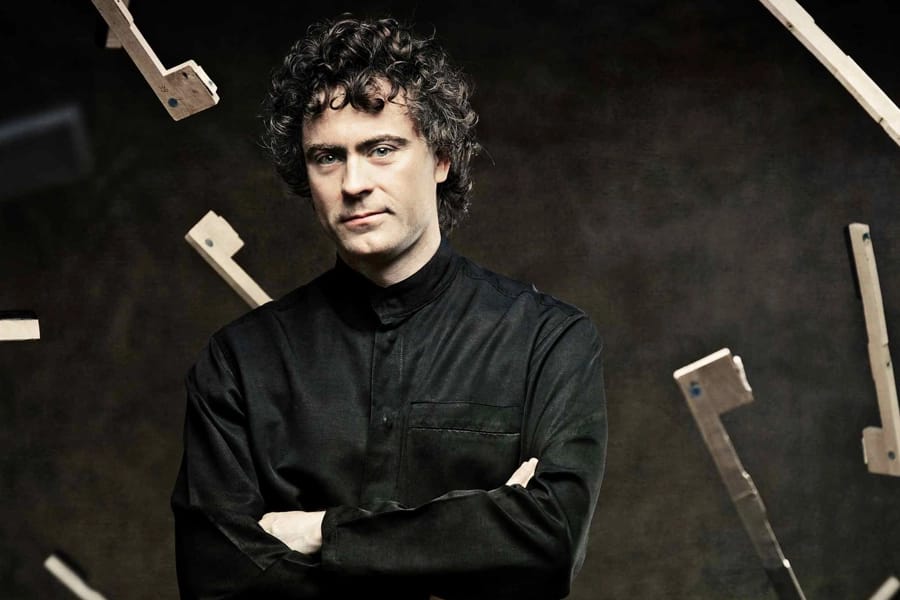
British pianist Paul Lewis joins the San Francisco Symphony in 3 performances this week of Beethoven’s Third Piano Concerto, a work that he sees as a turning point for the composer. Daniel Harding conducts the concerts (which include a 2:00 afternoon performance Thursday) the other half of which is Richard Strauss’ An Alpine Symphony.

There’s more information about the concerts at the San Francisco Symphony website.

“In many ways, the third is very typical of middle-period Beethoven,” he says. “I mean, it’s the start of that period, but it has that dramatic Beethovenean stamp, unmistakeably, really.” Lewis should know, he’s performed and recorded all of the sonatas and concertos. “This is the point at which Beethoven really, truly makes his mark. Aside from the character, the piano writing, the orchestral writing, it’s interesting to see that the cadenza now is an integral part of the structure of the first movement. He doesn’t just leave it to the soloist to improvise their way through. He writes it, and in fact, the climax of the whole first movement is in the cadenza. He takes a far more integral approach to structure. And that’s one of the things that really makes it a pivotal work in the cycle.” Beethoven chose to go harmonically far afield in the middle movement of the concerto, as well. Normally in a work in C minor, the middle movement might be in the relative Major key that shares its key signature: E-flat. But instead, it’s in E Major. “There has to be some sort of tension that you hold between the end of the first movement and the beginning of the second. Because that C minor to E major is just the most wonderful thing. The first time you hear the E major chord, I mean, it’s such a different world away, and the effect of the contrast is… is huge.” He returns to C minor for the third movement, which has an insistent rondo theme. “It’s so full of tension as well. There’s so much tension so far, certainly in the first movement – that C minor drama and tension comes back. He really doesn’t resolve it until the very end. Another typically Beethovenean hallmark.”


Pop CultureThe State of the Arts
Written by:
Jeffrey Freymann
Jeffrey Freymann
Published on 05.11.2018
Loading...

MORE LIKE THIS

A Concerto Finished by a Virtuoso

A Concerto Finished by a Virtuoso

Wu Man, renowned Pipa player, collaborates with the China NCPA Orchestra for a concert featuring Lou Harrison's concerto, Brahms’ Symphony No. 4, and Luan Tan by Chen Qigang.

05/11/2018
A Competition-Winner’s Concerto

A Competition-Winner’s Concerto

William Langlie-Miletich, the first double bass player to win the Irving M. Klein International String Competition, is set to perform with the Peninsula Symphony. He's also a student at the Curtis Institute of Music.

05/11/2018
The ‘Wrong’ Concerto

The ‘Wrong’ Concerto

Pianist Maria Joao Pires overcomes surprise during a concert, playing a different Mozart concerto than expected. Captured in the documentary, Attrazione d’amore.

05/09/2018
Concerto from a Banjo Virtuoso

Concerto from a Banjo Virtuoso

Banjo virtuoso Béla Fleck releases his second concerto, the Juno Concerto, inspired by his son. The piece, performed with the Colorado Symphony, follows his first work, The Imposter.

03/28/2017
Celebrating 50 Years of the Hewlett Foundation with a Twist

Celebrating 50 Years of the Hewlett Foundation with a Twist

The Hewlett Foundation marks its 50th anniversary with an $8M project, the Hewlett 50 Arts Commissions, funding 10 performing arts works annually for five years in the Bay Area.

03/27/2017
A Tailor-Made Cello Concerto

A Tailor-Made Cello Concerto

Cellist Joshua Roman performs a concerto by Mason Bates with Berkeley Symphony, conducted by Christian Reif. The concert also features Beethoven’s Symphony No. 4.

03/27/2017