Schedule
HostsWays to Give
HomePlaylistSchedule
HostsEventsOn DemandOur StoryOur TeamWays to Give Become a Sponsor
How to ListenVisit Help CenterContact Us

Find Us on Social Media:

Logo image

Find Us on Social Media:

Download Our Mobile App:

google play icon

About

HomePlaylistSchedule
HostsOn DemandOur StoryOur Team

Community

EventsWays to Give Become a SponsorPressDiversity StatementCareersAnnual EEO ReportDigital Accessibility

Help

Visit Help CenterContact UsHow to Listen

©2025 Classical California

Sweepstakes RulesFCC ComplianceLocal Public FilesCPB ComplianceAnnual EEO ReportPrivacy PolicyCode of Integrity

articles / Pop Culture

A Very Short Movement to Celebrate the Solstice

Pop CultureThe State of the Arts

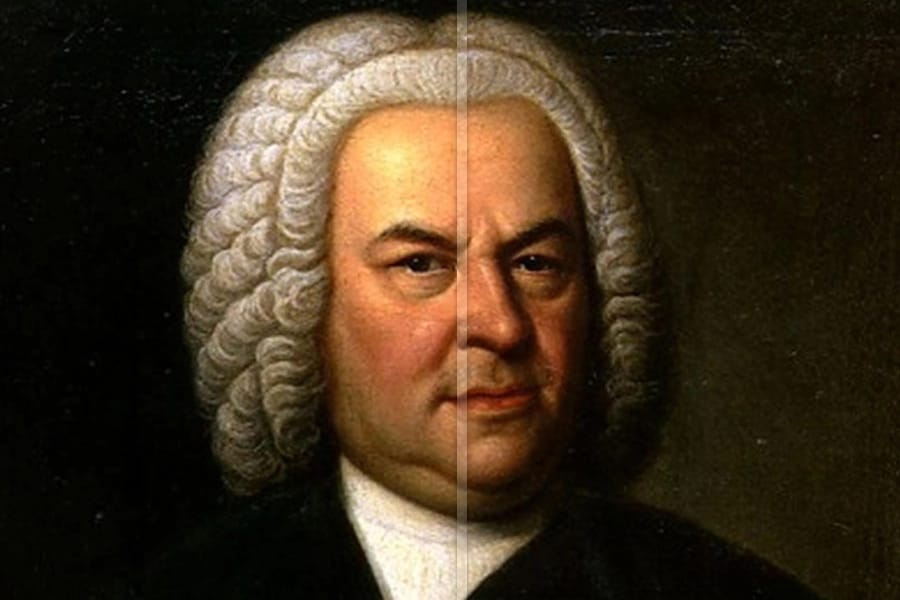
Tomorrow is the Winter Solstice, the day when there’s the shortest amount of daylight of the year – and a perfect time to reconsider the all but microscopic middle movement of Bach’s Brandenburg Concerto No. 3. On the printed score, it’s only one measure long, containing two chords that aren’t even in the same key as the movements on either side of it. And yet, it gives performers the freedom to improvise and embellish to their heart’s content.

A Very Short Movement to Celebrate the Solstice
00:00

The one measure ‘Adagio’ is a Phrygian half-cadence, which although a typical (if not quite resolved) way of ending a phrase, here is isolated into just the two chords. But many today choose to embellish it with flourishes – from any combination of the violins, violas, cellos, and harpsichord that are playing. It creates a natural break in tempo and energy from the spirited first and final movements, which is why drawing it out into a longer pause seems like a way to help balance the divisions. Sometimes a separate piece of music will be swapped in, as also might have happened in Bach’s day. Others, like in the Freiburg Baroque Orchestra performance below, use it simply as a place to catch one’s breath, ever so briefly.

The Adagio movement in this video from Voices of Music is from 5:36 to 5:45 (blink and you’ll miss it!)

In this performance, the Munich Bach Orchestra gets to rest while Karl Richter has an elaborate harpsichord cadenza from 6:09 until 7:13:

And in this one by the English Chamber Orchestra, they play an entirely different piece (with the same Phrygian half-cadence ending) from 5:38-8:10:


Pop CultureThe State of the Arts
Written by:
Jeffrey Freymann
Jeffrey Freymann
Published on 12.19.2019
Loading...

MORE LIKE THIS

A One-Measure Movement on the Shortest Day

A One-Measure Movement on the Shortest Day

Explore the unique, brief Adagio movement in Bach's Brandenburg Concerto No. 3, its role in balancing the piece, and how various orchestras interpret and embellish it.

03/27/2019
A Musical Accompaniment to the Totality

A Musical Accompaniment to the Totality

The Exploratorium in San Francisco will present a unique musical performance, "233rd day, before and after Totality", during the eclipse. The piece, by Wayne Grim, uses data from the eclipse to create sound.

05/11/2018
Composers Looking to the Heavens

Composers Looking to the Heavens

The a cappella ensemble Gaude presents 'Heaven Full of Stars', a concert inspired by the night sky, featuring 800 years of choral music. The idea came from Jace Wittig's stargazing experience.

05/11/2018
A Busy Start to the Arts Season

A Busy Start to the Arts Season

Bay Area's arts organizations unveil new seasons, featuring performances by San Francisco Opera, Steinway Society, and more. Highlights include Leonard Bernstein's centennial celebration.

05/11/2018
A ‘Heavenly Harp’ Comes to the Green Music Center

A ‘Heavenly Harp’ Comes to the Green Music Center

The Santa Rosa Symphony, led by Bruno Ferrandis, presents 'Heavenly Harp' featuring Marie-Pierre Langlamet, principal harpist of the Berlin Philharmonic, at Weill Hall.

01/13/2017
A Chanticleer Christmas Returns to the Bay Area

A Chanticleer Christmas Returns to the Bay Area

Chanticleer's Christmas tour is underway, with performances in Atlanta and Durham. The ensemble will return to the Bay Area from Dec 10-23, featuring traditional carols and new compositions.

12/08/2016