Schedule
HostsWays to Give
HomePlaylistSchedule
HostsEventsOn DemandOur StoryOur TeamWays to Give Become a Sponsor
How to ListenVisit Help CenterContact Us

Find Us on Social Media:

Logo image

Find Us on Social Media:

Download Our Mobile App:

google play icon

About

HomePlaylistSchedule
HostsOn DemandOur StoryOur Team

Community

EventsWays to Give Become a SponsorPressDiversity StatementCareersAnnual EEO ReportDigital Accessibility

Help

Visit Help CenterContact UsHow to Listen

©2025 Classical California

Sweepstakes RulesFCC ComplianceLocal Public FilesCPB ComplianceAnnual EEO ReportPrivacy PolicyCode of Integrity

articles / Bach

A Brief History of Composers Sneaking Their Names into Their Music

BachShostakovichPop CultureArts Alive BlogMusic Theory
Hit play below to listen to our Arts Alive feature.  
A Brief History of Composers Sneaking Their Names into Their Music
00:00
 

A musical cryptogram is a sequence of pitches that utilizes the relationship between the note names and letters of the alphabet to spell out words. Most often, it has been used by composers to secretly embed their own name or initials into a piece of music. A lot of composers use the German spelling for the notes so that in addition to the musical letters A-B-C-D-E-F-G, it also includes the letters H and S on chromatic pitches.

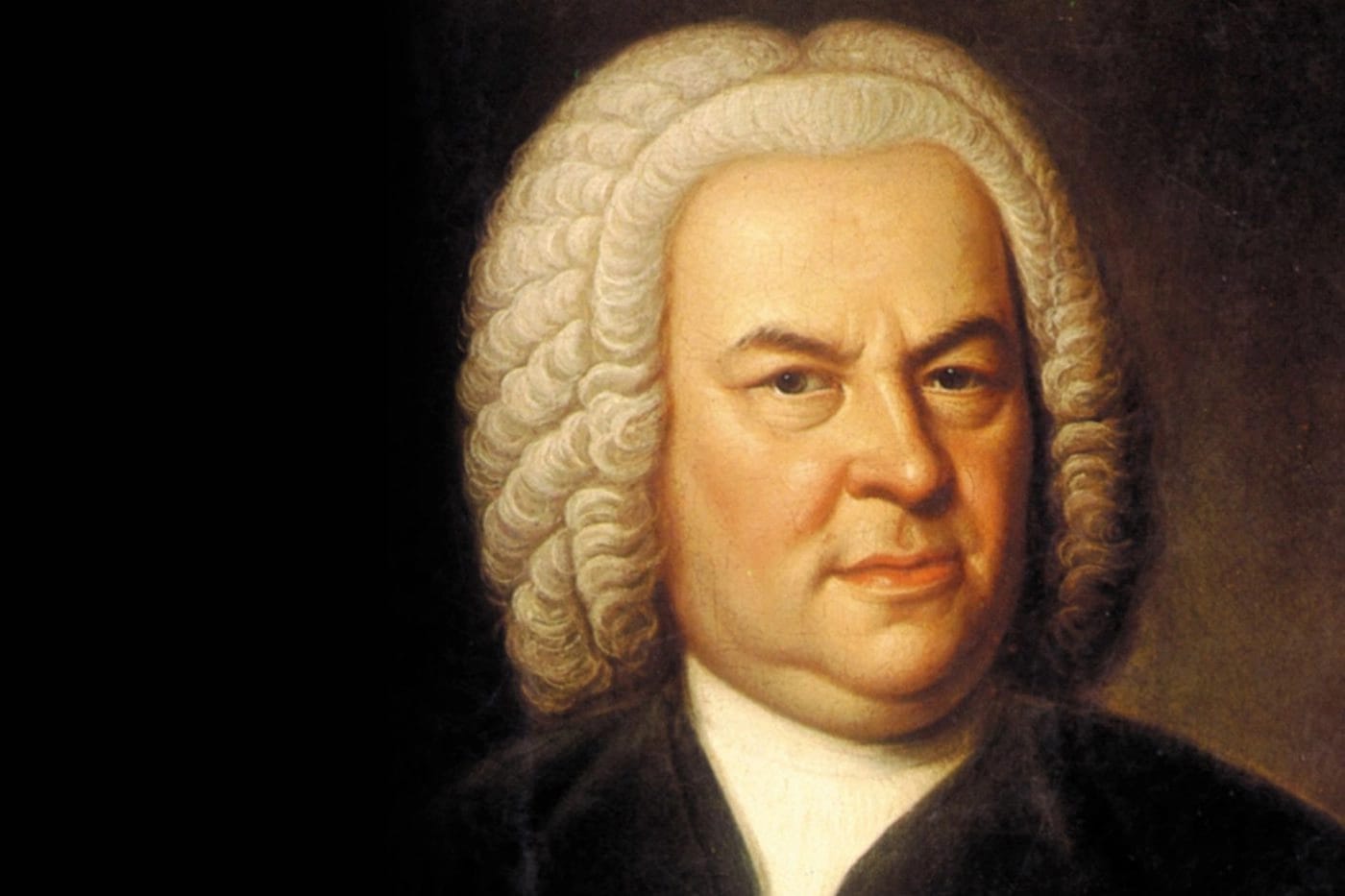
Johann Sebastian Bach was one of the first to cipher his name, B-A-C-H (B-flat, A, C, B-natural), into his music. Bach uses his name as the final fugue subject in the last Contrapunctus of The Art of Fugue and the motive also appears in the Sinfonia No. 9 in F Minor. Many composers in the 19th and 20th centuries also paid homage to J.S. Bach by using the B-A-C-H motive in their own music too.

The Russian composer Dimitri Shostakovich also loved to put his own name into his music. He used the letters D-S-C-H (D, E-flat, C, B-natural) to spell it. The motif occurs in many works including the 8th, 10th and 15th Symphonies, the Violin Concerto No. 1 in A minor, the Cello Concerto No. 1 in E-flat major, and most notably the String Quartet No. 8 in C minor where the motive appears prominently in every single movement.

Many other composers enjoyed the cryptic game of embedding their names in their music too: Robert Schumann (S-C-H-A), Alban Berg (A-B), and Arnold Schoenberg (A-S-C-H-B-E-G) amongst others. So next time you’re in the symphony hall, you may just be hearing an encrypted code!

BachShostakovichPop CultureArts Alive BlogMusic Theory
Written by:
Thomas Kotcheff
Thomas Kotcheff
Published on 10.15.2019
Loading...

MORE LIKE THIS

10 Scary-Good Performances of Bach’s Toccata and Fugue

10 Scary-Good Performances of Bach’s Toccata and Fugue

Explore the Classical California Ultimate Playlist's blog series, featuring awe-inspiring performances of Bach's Toccata and Fugue in D minor on various instruments, from organ to glass harp.

09/16/2024
A Brief History of Keyboards…

A Brief History of Keyboards…

Explore the evolution of keyboards from the quiet clavichord to the modern grand piano, highlighting key developments and changes in sound and design.

05/10/2020
A Bach Birthday Celebration…

A Bach Birthday Celebration…

Celebrate Johann Sebastian Bach's birthday with a quiz! Identify ten of his works, including pieces from the Goldberg Variations, Cantata BWV 147, and more.

03/02/2020
The Personalities of Bach’s Keyboard Concertos…

The Personalities of Bach’s Keyboard Concertos…

Renowned pianist Simone Dinnerstein returns as Artist-in-Residence with the New Century Chamber Orchestra, leading a concert of Bach Keyboard Concertos. She shares insights on the distinctive personalities of each concerto.

11/07/2019
Chapman Challenge: The Mystery of Mendelssohn’s Bach Revival

Chapman Challenge: The Mystery of Mendelssohn’s Bach Revival

This article discusses how Felix Mendelssohn revived interest in Bach's music in 1829, leading to a renewed appreciation for the Baroque period.

05/24/2019
Why Did So Many Members of the Bach Family Pursue Music?

Why Did So Many Members of the Bach Family Pursue Music?

In this Chapman Challenge, Alan Chapman explains why the Bach family was deeply involved in music. It was their family business, with training starting in childhood, often taught by relatives.

04/01/2019