articles / Pop Culture
The Wheel of Fortune: Spring, Spirits, and Seeking Love in “Carmina Burana”
 Photo by Classical Experience
“In a world where heroes are heroes, lovers seek love, and only dreamers can dream big things, comes the one breakfast cereal to save us all – BURANA!”
The opening strains of Carl Orff’s 1936 choral masterwork Carmina Burana has been used to underscore any number of movie trailers, product endorsements, and battle scenes from television. This is a piece of music that is recognizable to almost anyone.
 Photo by Wikipedia
But how much do you know about where it came from? And who or what is Carmina Burana?
The title Carmina Burana comes from Latin, meaning Songs of Beuren. Beuren is short for the Benedictine monastery of Benediktbeuren in the South German region of Bavaria. The 24 texts found in Orff’s work come from, let’s just say, less than sacred poems that were written by monks and their students over 200 years starting in the 11th century. The identities of the authors are largely unknown. While most are in Latin, some were written in an older form of the German language.
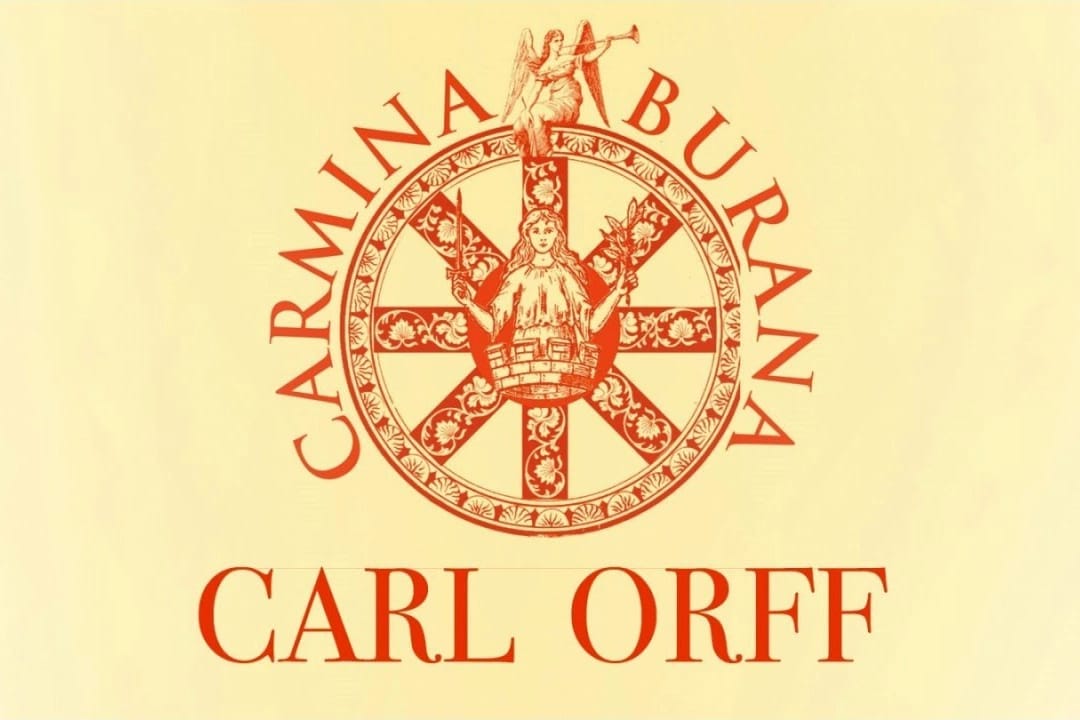
When Orff adapted the texts for his cantata, he split them up into three large groups. The first, In Spring/In the Meadow, focuses on the joy and renewal of the end of winter and the return of warm weather. In the Tavern, the second section, is a bawdy pub song that is interspersed with the lament of a dead swan as he is roasted on a spit. The final section of the cantata turns to matters of the heart as a girl dreams of her true love and that true love seeks her out – with plenty of flirtation and veiled eroticism thrown in for good measure. All of this is bookended by the famous chorus “O Fortuna” which represents the medieval concept of the Wheel of Fortune, illustrated here with the goddess Fortuna who controls the fate of all.

Photo by Pre-Geblin Tarot History
Carmina Burana was first produced in 1937 with a full orchestra, choir, soloists, and dancers. After its premiere, Orff told his publisher to throw out everything else he had written for this would be “where my collected works begin.” It has been recorded over 300 times and is easily the most performed choral work of the 20th century. In fact, I will bet you $20 that you could go to the internet right now be able to find at least one performance of Carmina coming up in the next two months somewhere in the world.
Speaking of which, back to my score study.